 Ninjutsu Melbourne
Why train with wooden staffs?
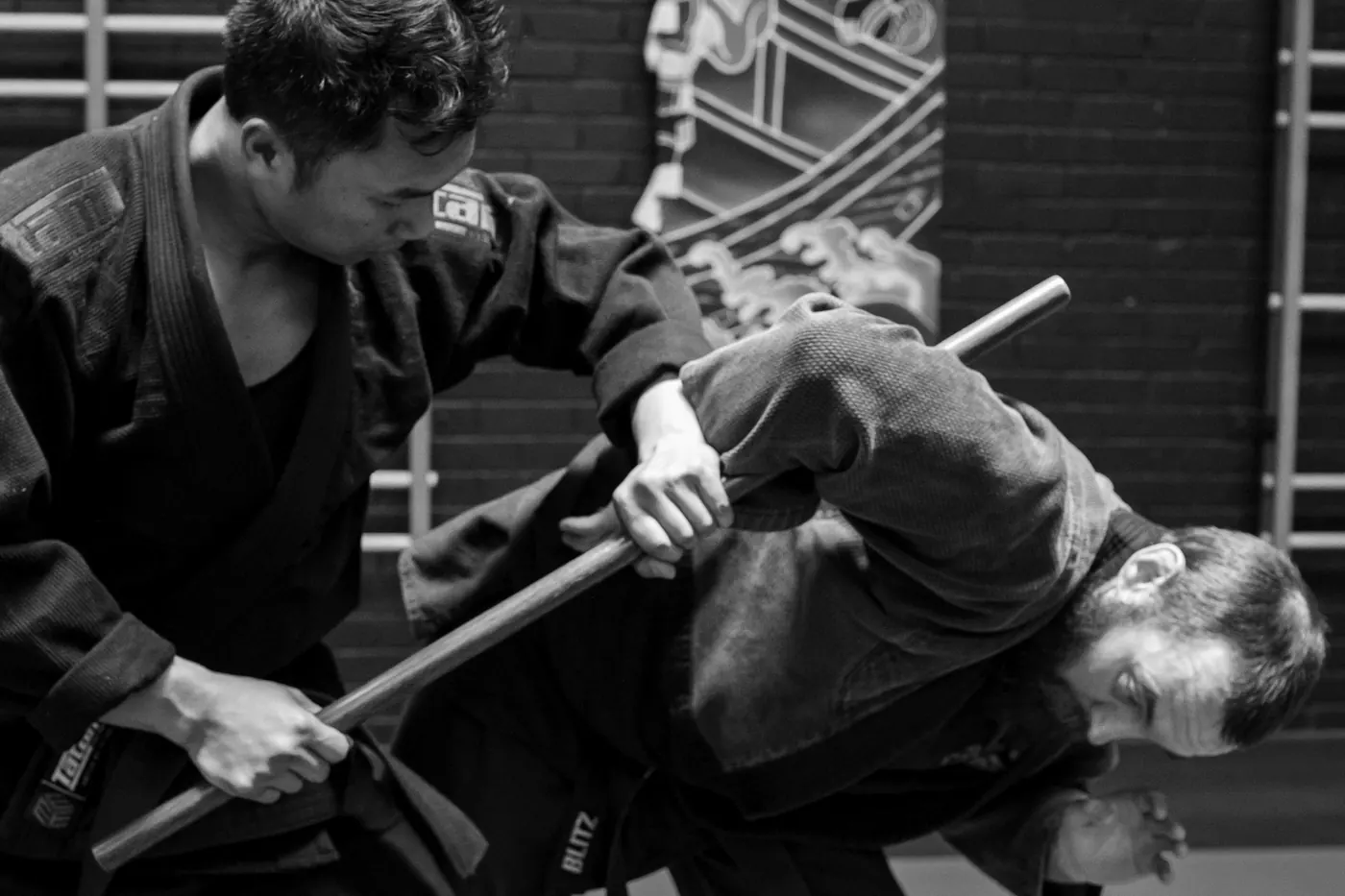
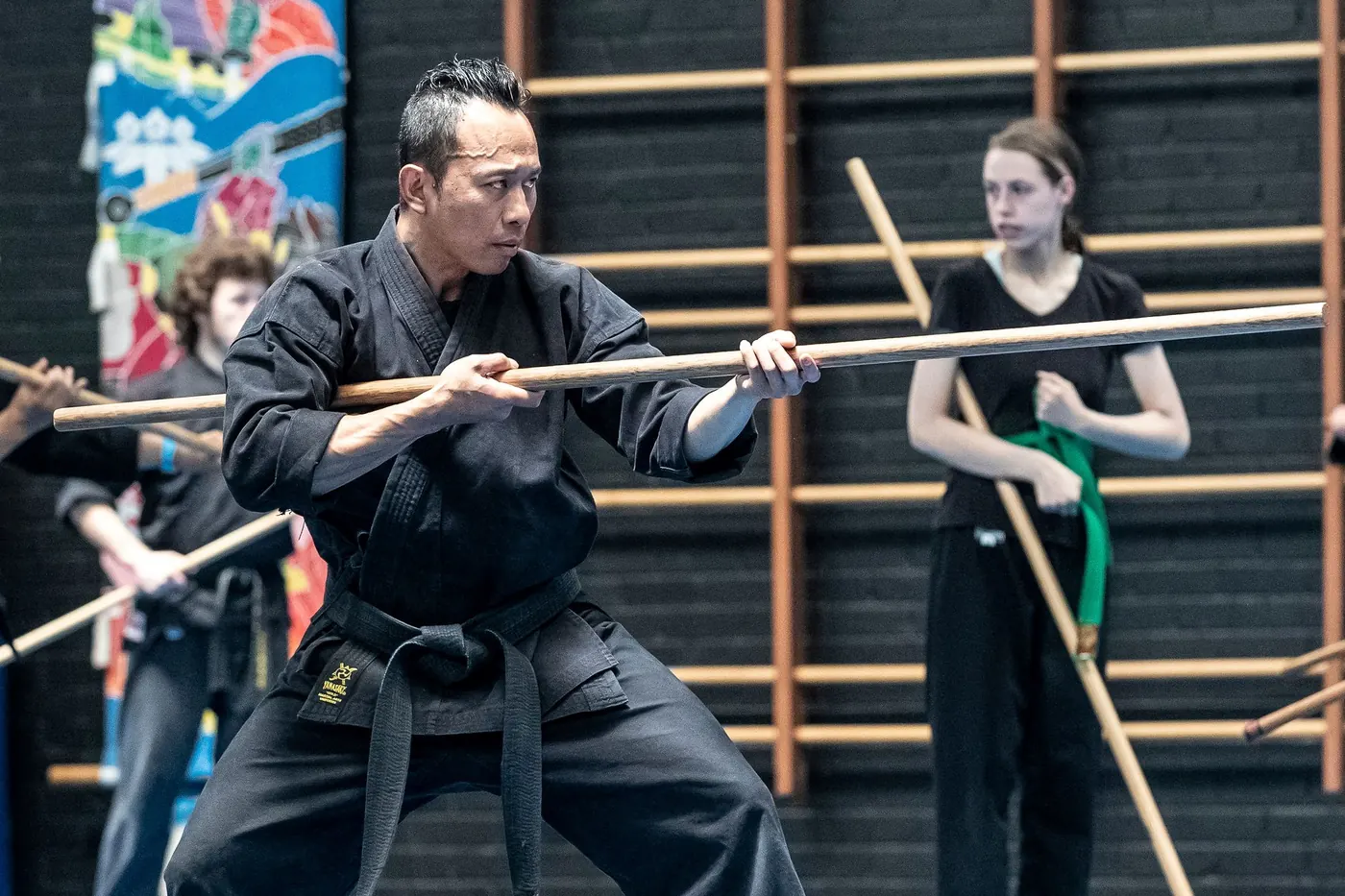
The three wooden staffs are the backbone of weapons training in Bujinkan Ninjutsu. Each one works at a different distance, so training all three teaches you to feel how far away an attacker really is and how quickly that distance can close. The hanbo (3 foot staff) works up close, the jo (4 foot staff) at middle range and the bo (6 foot staff) at long range.
Staff training is also some of the most practical weapons training you can do. A walking stick, a broom handle, an umbrella or a length of pipe can all be used with the same principles, so the skills carry over to everyday objects in a way that a sword never could.
Just as importantly, the staffs teach good body movement. A staff is moved by the hips, legs and spine, not by the arms alone, and that same whole body movement is what gives Bujinkan taijutsu its power without relying on size or strength.
Bo staff training
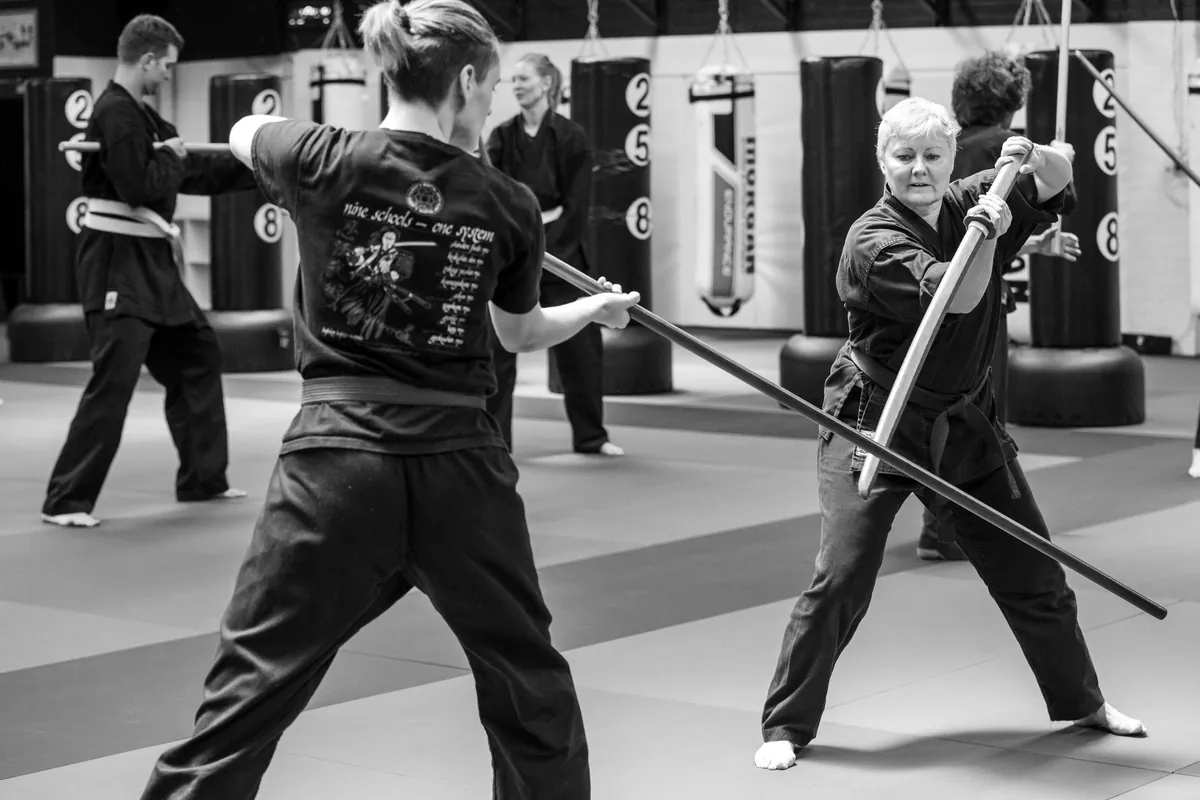
There are 60 kata for training in bo jutsu (6 foot staff), all done against an opponent with a sword. We concentrate on the kamae (postures) and sabaki (body movement and evasion) levels of technique. We also practise strikes, locks, chokes and throws using the bo in our taijutsu training.
The bo is the longest of the staffs and gives you the greatest reach, which makes it ideal for learning to control a large space. Both ends of the bo are used, and the hands slide along its length so it can strike from long range one moment and block or lock at close range the next. Training against a sword teaches you to stay out of range until the right moment, then commit fully.
Because it is long and heavy, the bo quickly shows up any habit of muscling a technique with the arms. Good bo work comes from posture, footwork and timing, and those qualities improve everything else you train.
Jo staff training
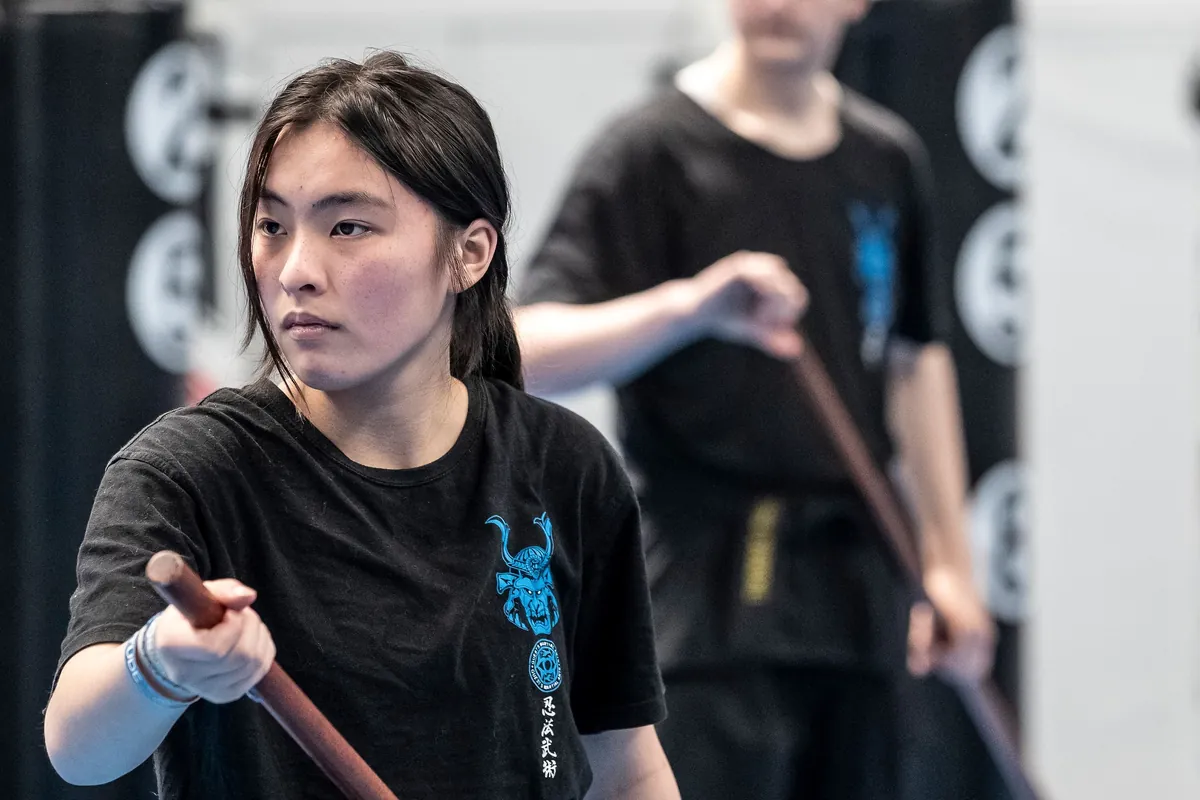
There are 8 kata in jo jutsu training. All are practised against a swordsman, with the swordsman as the defender. They are relatively short, with no more than nine movements each, which makes them a good way to study timing and the moment of contact in detail.
Our jo (4 foot staff) training is quite different to Aikido in many ways: the kamae (stances) and the grips are in different places on the jo, and the body movement is also very different to Aikido.
At 4 feet, the jo sits between the reach of the bo and the speed of the hanbo. It is long enough to keep a sword at a distance but short enough to change direction quickly, so jo training teaches you to switch smoothly between striking, deflecting and controlling an opponent's weapon.
Hanbo staff training
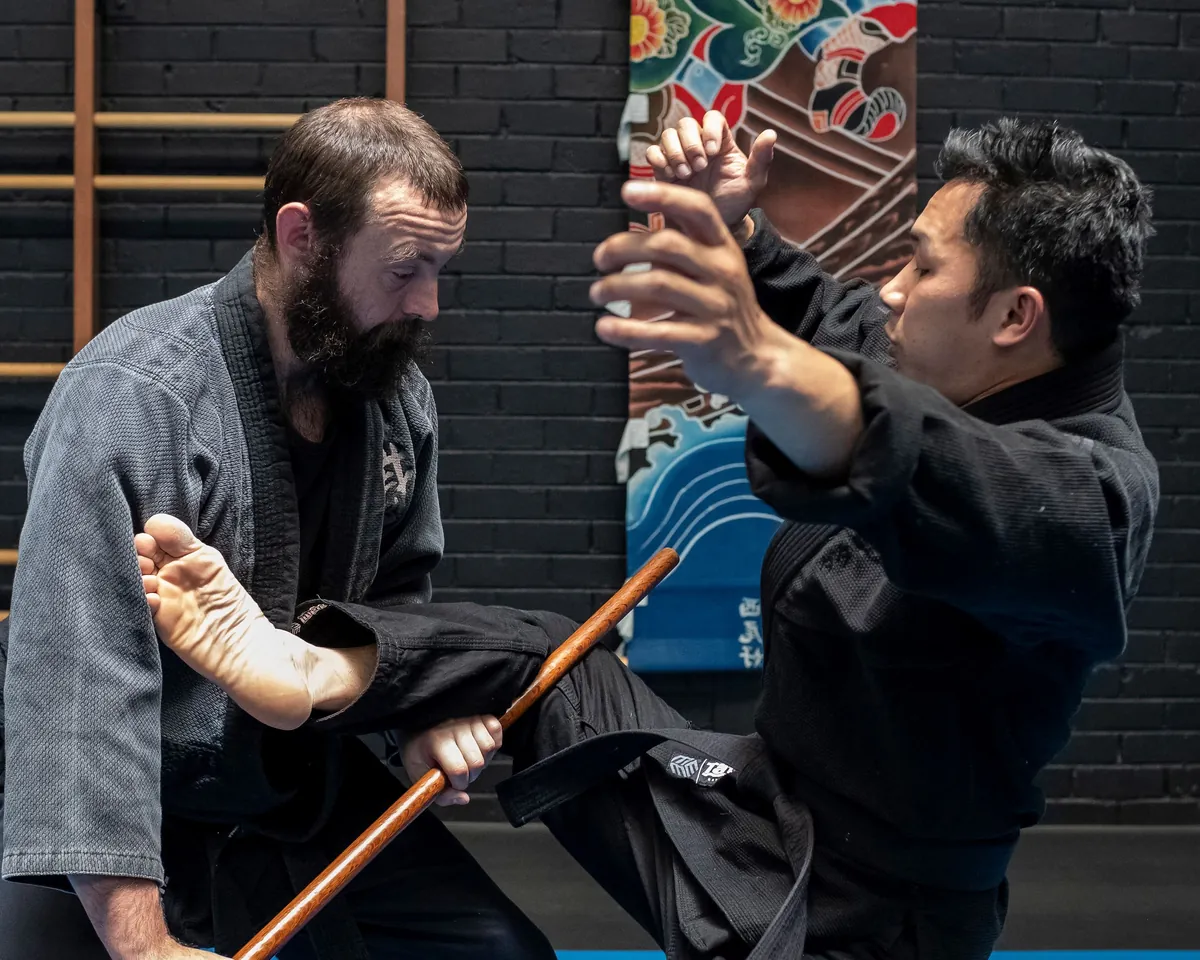
Striking, throwing, locking and choking are all practised with the hanbo (3 foot staff). It is a very versatile and effective form of stick training with many modern applications, because it is about the length of a walking stick or umbrella.
We also practise the Kukishin Ryu kata for hanbo against the sword. The kata contain the basic standing positions (kamae) and the basic strikes from those positions. There are also many striking drills to learn, making the hanbo a well rounded, very practical weapon.
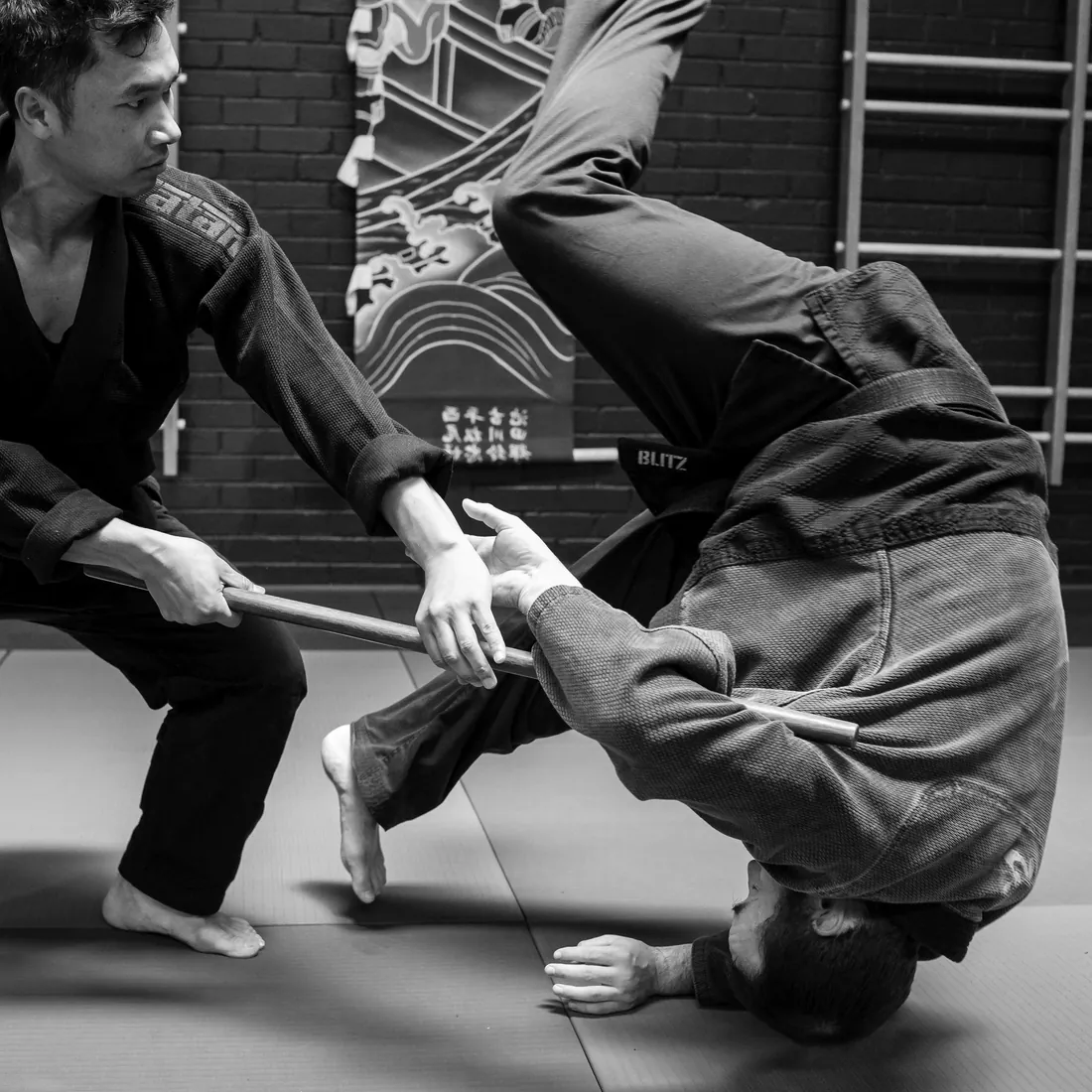
At close range the hanbo becomes an extension of your unarmed techniques. Many of the joint locks and throws from taijutsu can be applied with the hanbo, often with more leverage and less effort, which is why it is a favourite with many students.
How staff training fits into class
Staff training is part of our regular adults classes, and our Junior Adults (11 to 15) students also study the hanbo and bo. Most staff kata are trained in pairs against a nominated attack with a nominated defence, so both partners know what is coming and the training stays safe. As your skill grows, the same techniques are practised with more speed, more variation and less warning.
For more information please see our ninja weapons, sword or flexible weapons training pages.