 Ninjutsu Melbourne
Why train with flexible weapons?
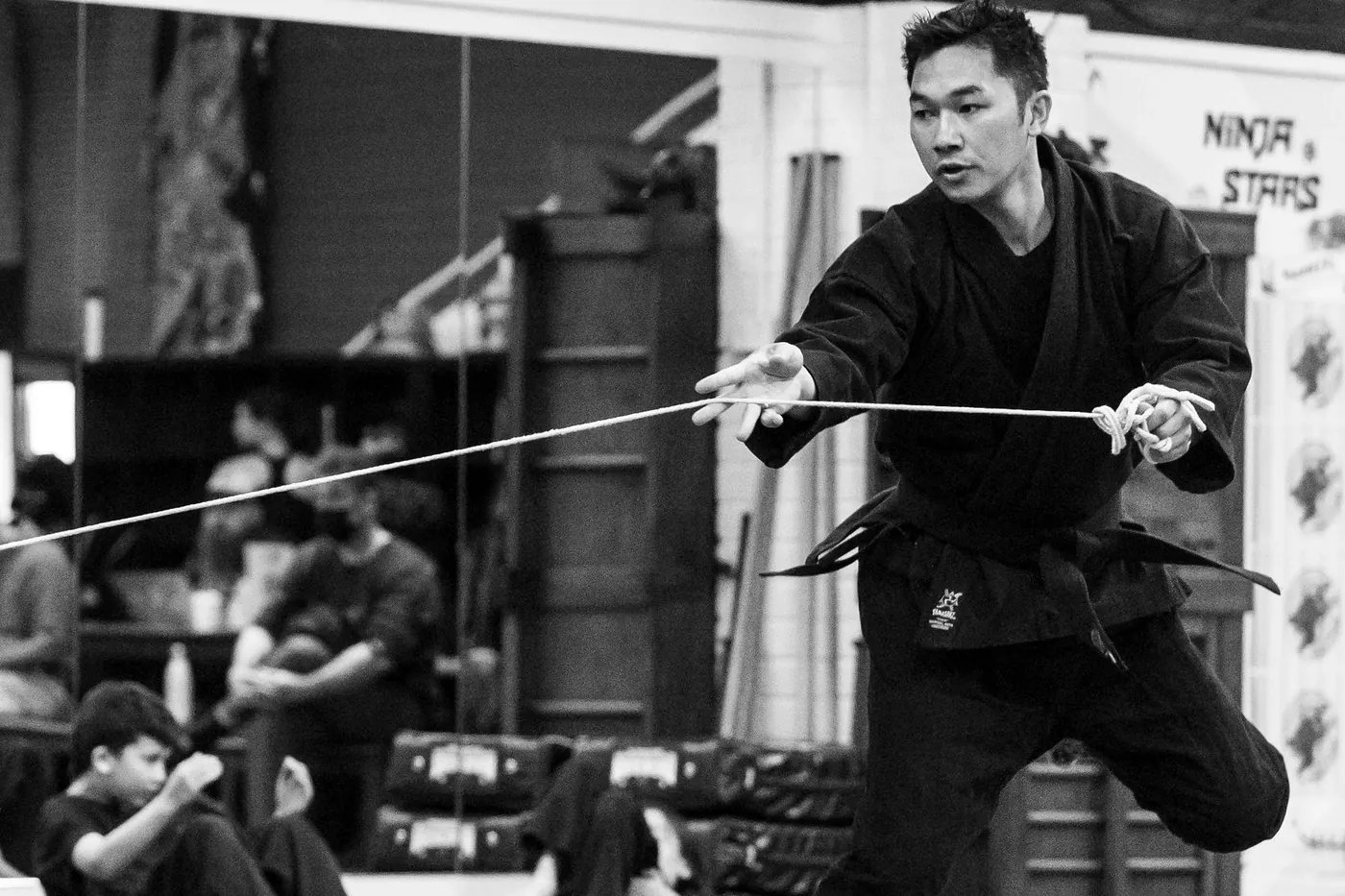
Flexible weapons behave very differently to a rigid staff or sword. A rope or chain can bend around a block, wrap around a limb and change direction in the middle of a strike, so training with them teaches a completely different kind of control and timing.
Flexible weapons training is also very practical. A belt, a scarf, a jacket, a bag strap or a length of cord can all be used with the same principles, which means these skills carry over to things people have with them every day.
In our dojo the flexible section of ninja weapons training covers three areas: the kasarifundo (short rope), hojojutsu (rope tying) and clothing.
Hojojutsu
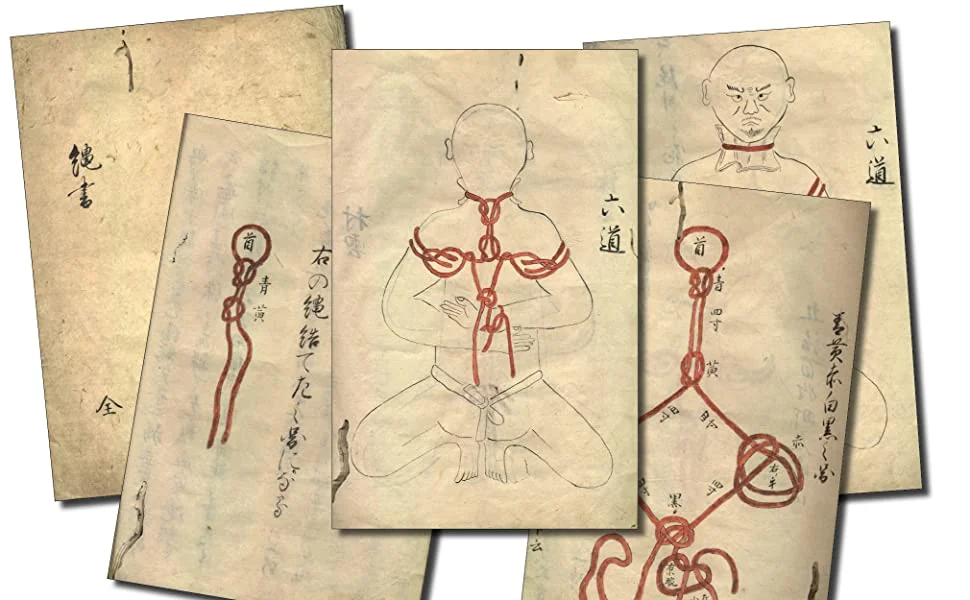
Hojojutsu is the practice of tying up your opponent with a long length of cord or rope. In the Bujinkan we practise it against a moving opponent: as they grab, kick or punch, you use techniques to entangle them in the rope.
Standard hojojutsu is used to restrain a prisoner or criminal. Even in Japan today the police still practise basic hojojutsu as part of their police academy training, as well as the jo (4 foot staff).
Hojojutsu historically gave Japanese police and officials a way to control someone without seriously injuring them. In training it teaches you to stay in control of an opponent's body while moving, to use their own movement against them and to keep tension on the rope so they cannot slip free. It is one of the more unusual parts of Bujinkan training, and students often find it surprisingly absorbing.
Kasarifundo training
The kasarifundo is a length of chain with a steel weight attached to each end. It can be used for striking, either with the weights in the hand or by holding one end and swinging it. You can also apply locks, chokes and throws with practice.
The actual weapon is very dangerous and is illegal to own in Victoria, so we don't use the real item for training. Instead, when practising kasarifundo we use a small length of rope (roughly 80 cm) with a knot tied in each end.
Because it is small and easily hidden, the kasarifundo was a weapon that could be carried without drawing attention. In training it teaches you to strike from unexpected angles, to wrap an attacker's wrist or weapon and then apply a lock, and to switch quickly between long and short range. The same techniques work with many everyday flexible objects.
Using clothing in self defence
Clothing is the flexible weapon you always have with you. A jacket can be used to cover an attacker's head or arms, to block a strike or to entangle a hand. A belt or scarf can be used like a short rope for striking, wrapping and controlling. An attacker's own clothing can also be used to control their balance and set up throws.
Training with clothing connects weapons training directly to real life self defence, because it uses what is actually available in the moment rather than a specialised weapon.
Is flexible weapons training safe?
Yes. We train with soft rope instead of chain, techniques are introduced slowly and most drills are done in pairs against a nominated attack. As with all our weapons training, the risk of injury is much lower than football or many other activities.
For more information on weapons training please see our sword or wooden weapons training pages.