 Ninjutsu Melbourne
Why weapons training matters
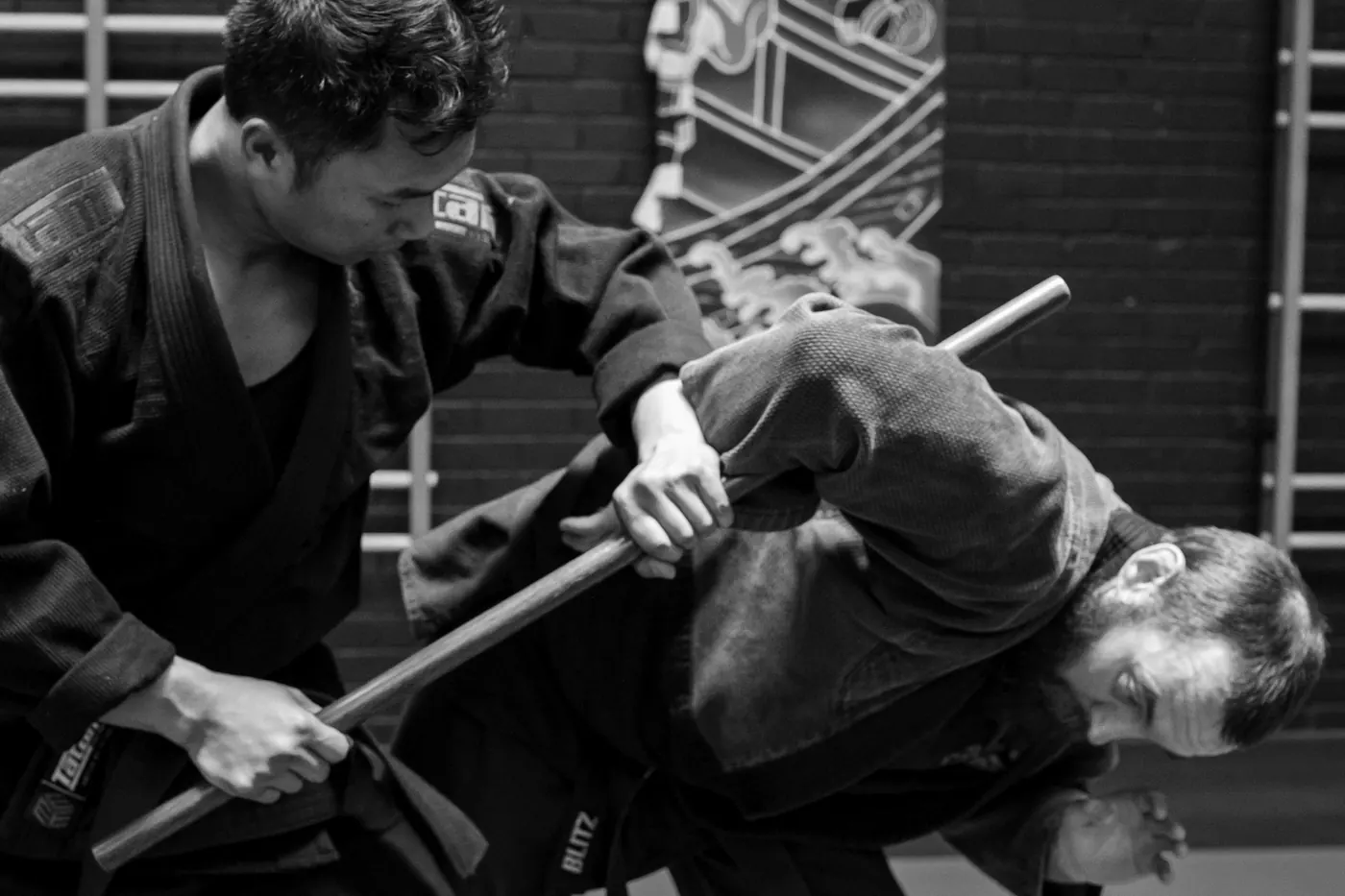
Weapons training is a foundational part of Bujinkan Ninjutsu. It is an excellent way to learn how to control distance, timing and positioning, the same skills that make your unarmed self defence work. A staff or sword makes mistakes in distance and timing obvious straight away, so you learn them faster than with empty hands alone.
A weapon extends your reach and your opponent's, which forces you to read the space between you more carefully. Step in a fraction too early against a sword and you are cut; stay a fraction too far away with a staff and your strike falls short. Learning to feel the right distance against a weapon makes judging distance against punches and kicks feel much easier.
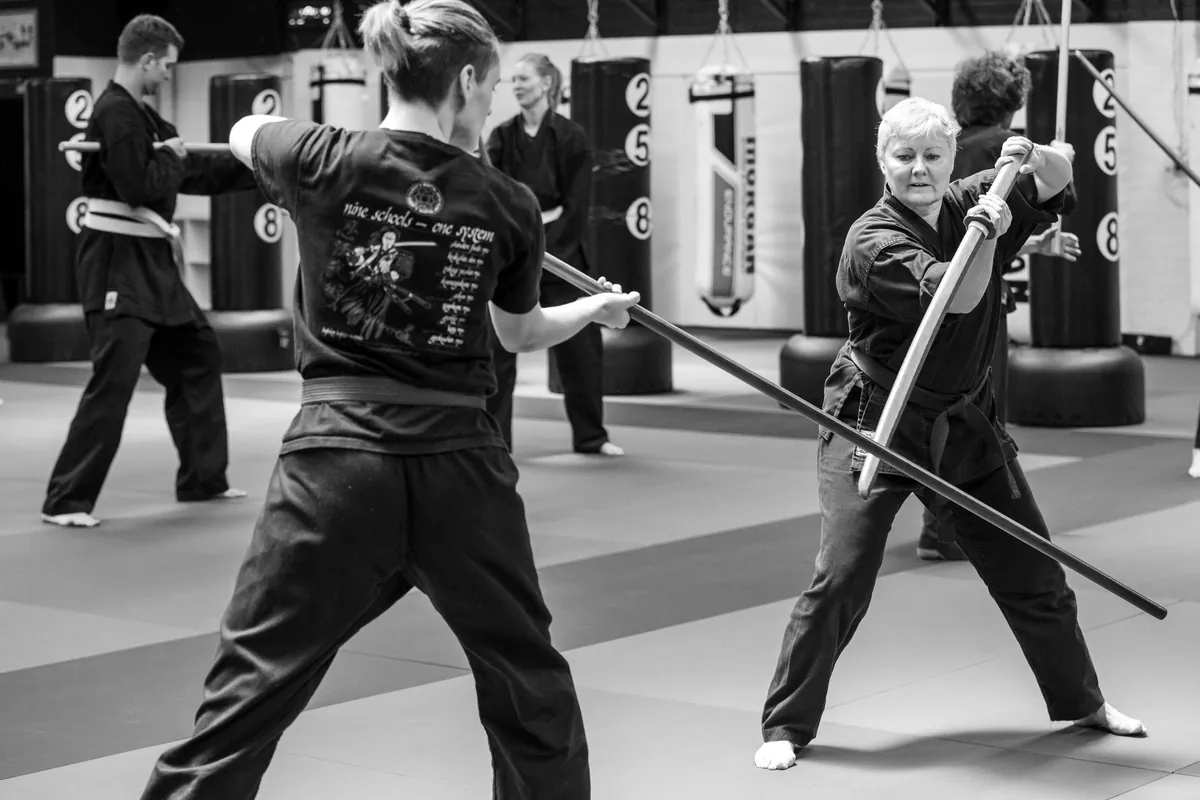
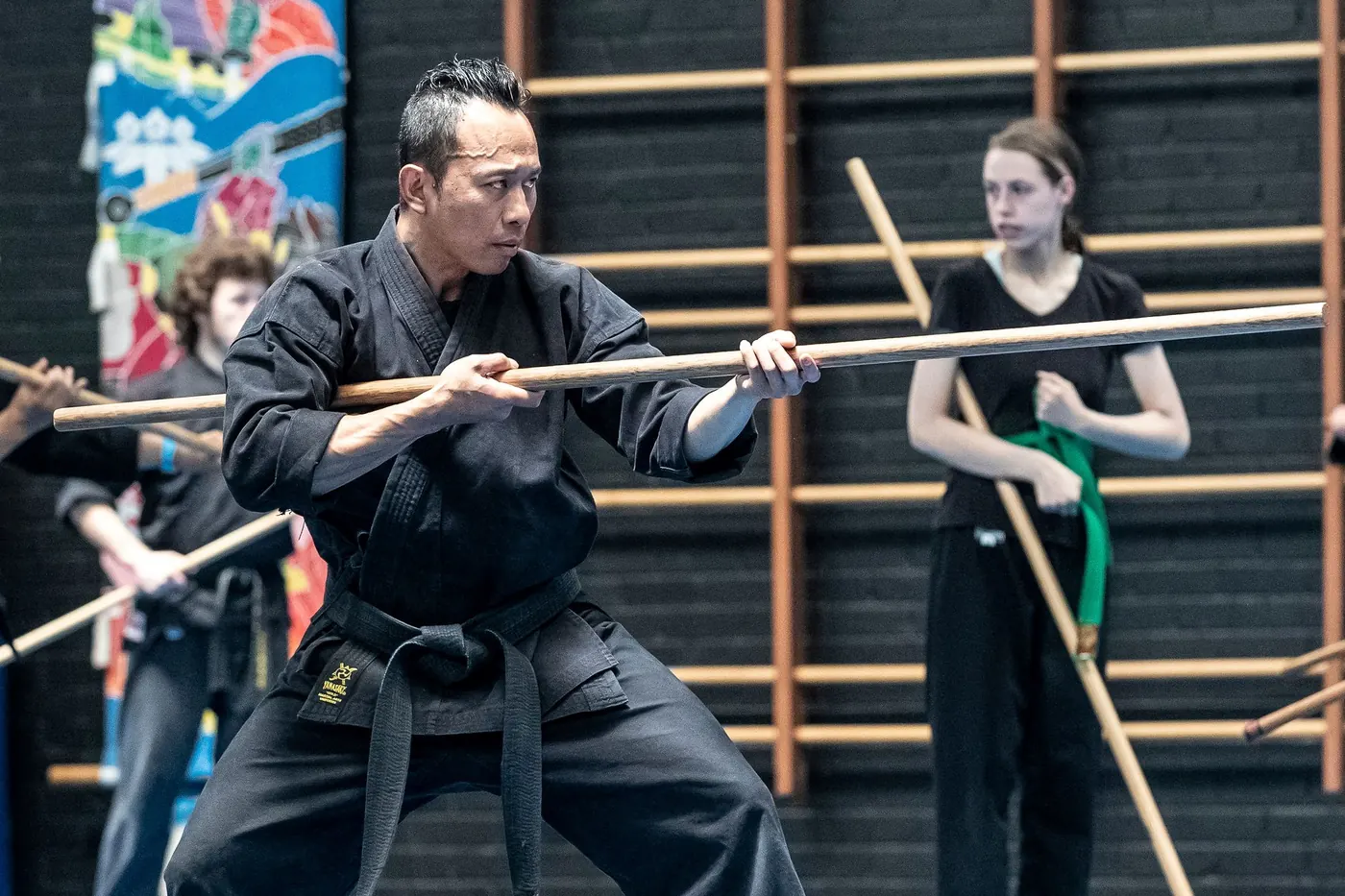
Weapons also teach good body movement. A 6 foot bo is too long to swing with your arms alone, so you learn to move it with your hips, legs and whole body. That same whole body movement is what gives Bujinkan taijutsu its power without relying on size or strength.
Finally, weapons training keeps you learning. Every weapon has its own kata, angles and applications, and each one shows your unarmed techniques from a new perspective. There is always something new to work on, which is one of the reasons students keep training for many years.
Bujinkan Ninjutsu weapons
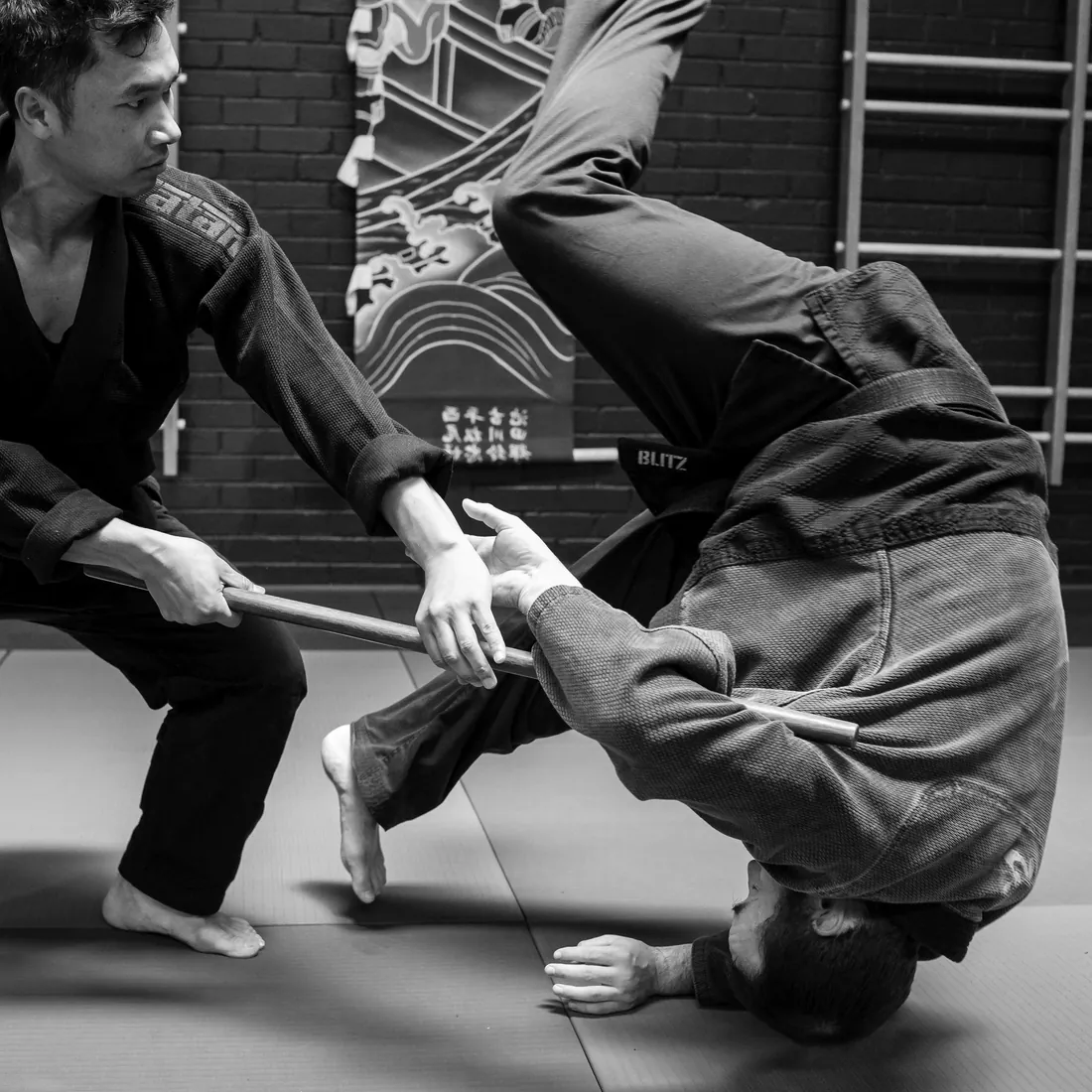
In our dojo the weapons training is split into three sections: the first is Blunt, the second is Flexible and the third is Sharp. These sections give you a well rounded understanding of classical weapons training while at the same time teaching you different distances of safety: three lengths of blunt weapons, three lengths of sharp weapons, and how flexible things can be used.
- Blunt - Hanbo / 3 foot staff · Jo / 4 foot staff · Bo / 6 foot staff
- Flexible - Kasarifundo / Short Rope · Hojo jutsu / Rope tying · Clothing
- Sharp (Wooden) - Tanto / Knife · Shoto / Short Sword · Katana / Sword
Blunt weapons: the staffs
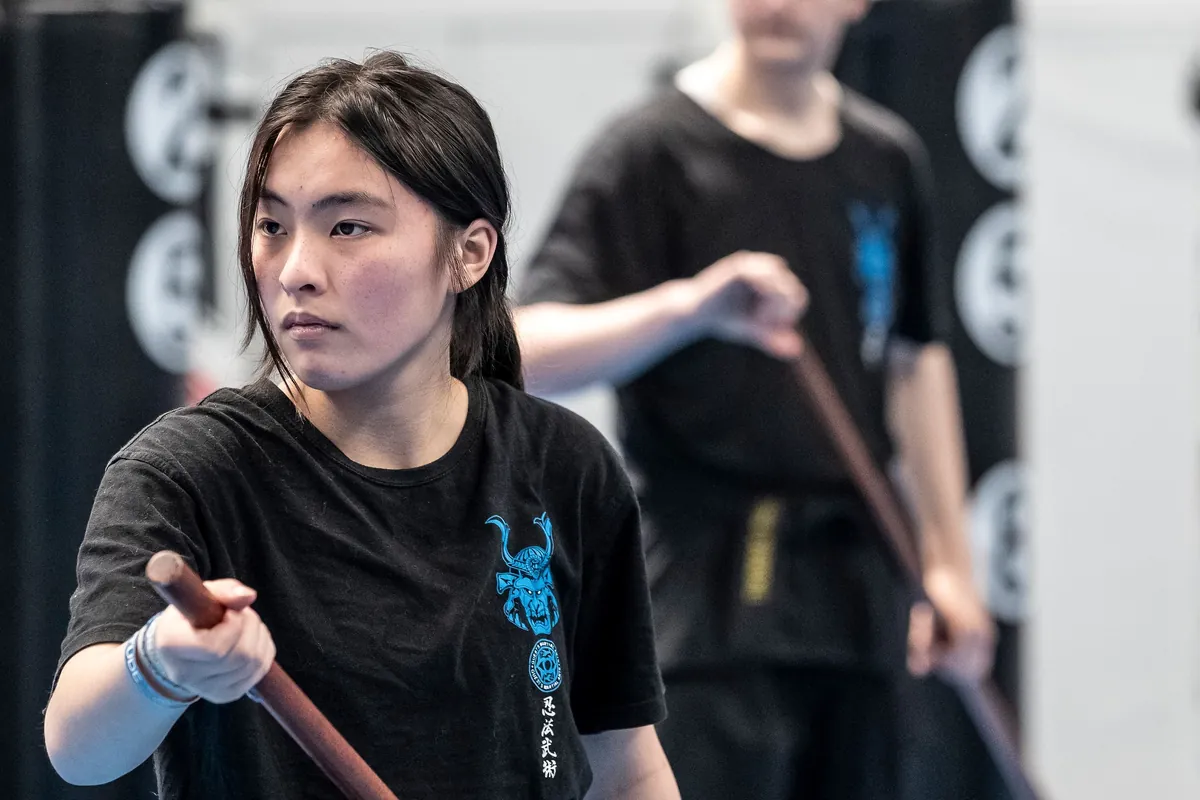
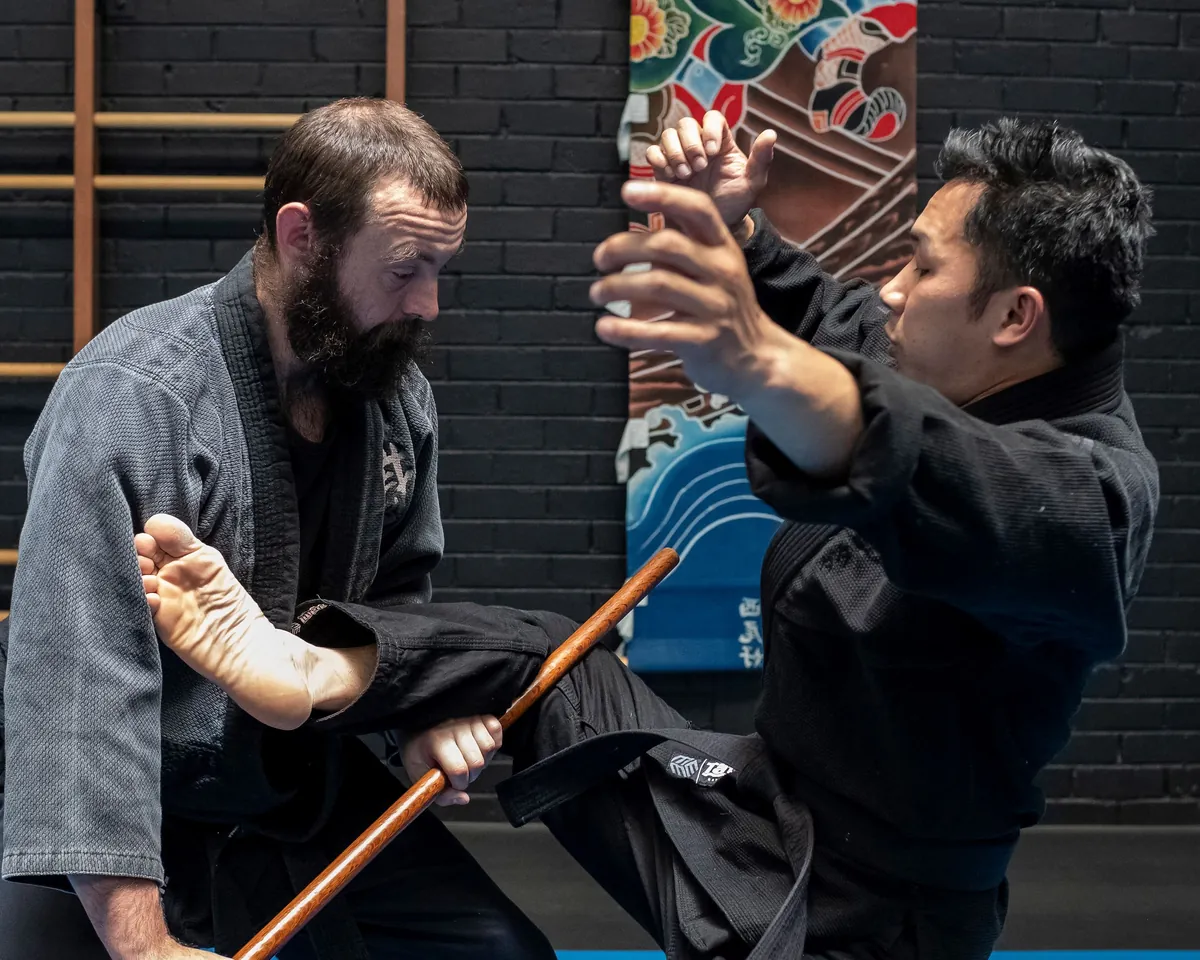
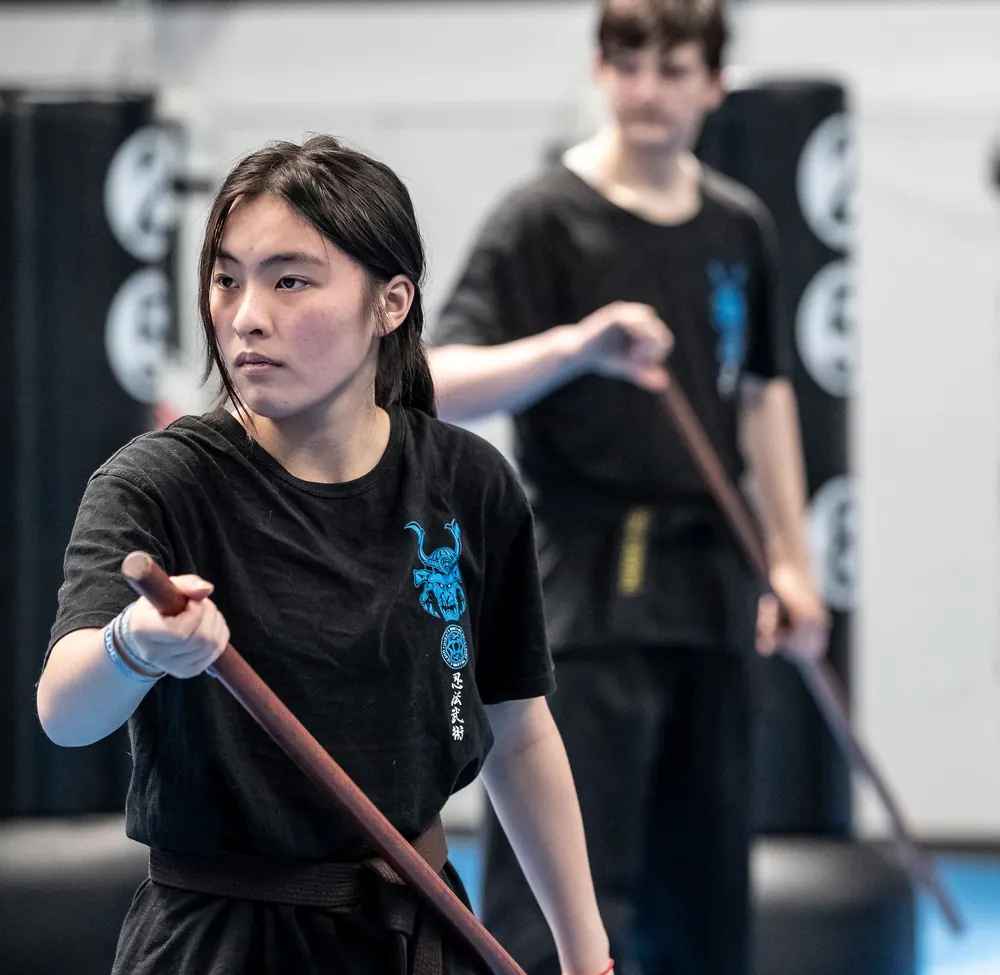
The three staffs teach three different distances. The hanbo (3 foot staff) is a close range weapon, about the length of a walking stick, and is used for striking, locking, throwing and choking. The jo (4 foot staff) works at a middle distance and is trained against the sword. The bo (6 foot staff) gives you the longest reach of all, and its 60 kata in the Bujinkan are all done against an opponent with a sword. See wooden weapons training for more.
Flexible weapons: rope and clothing
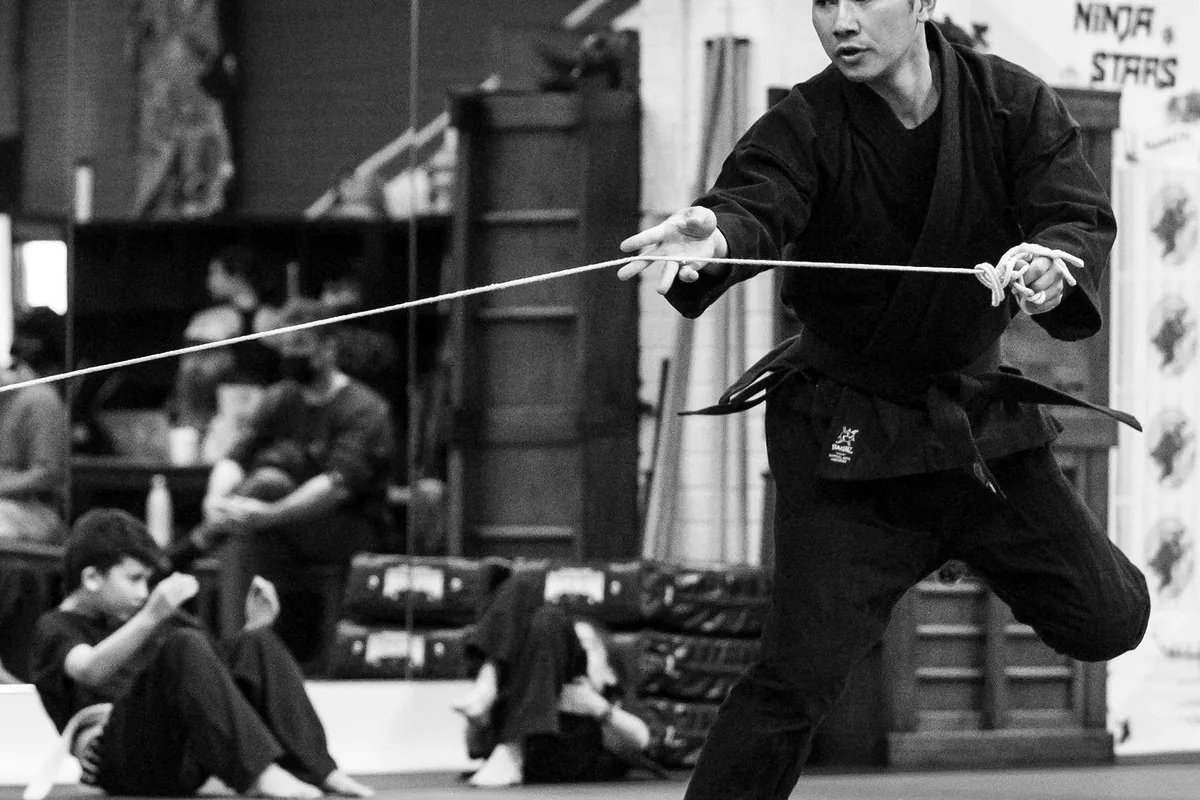
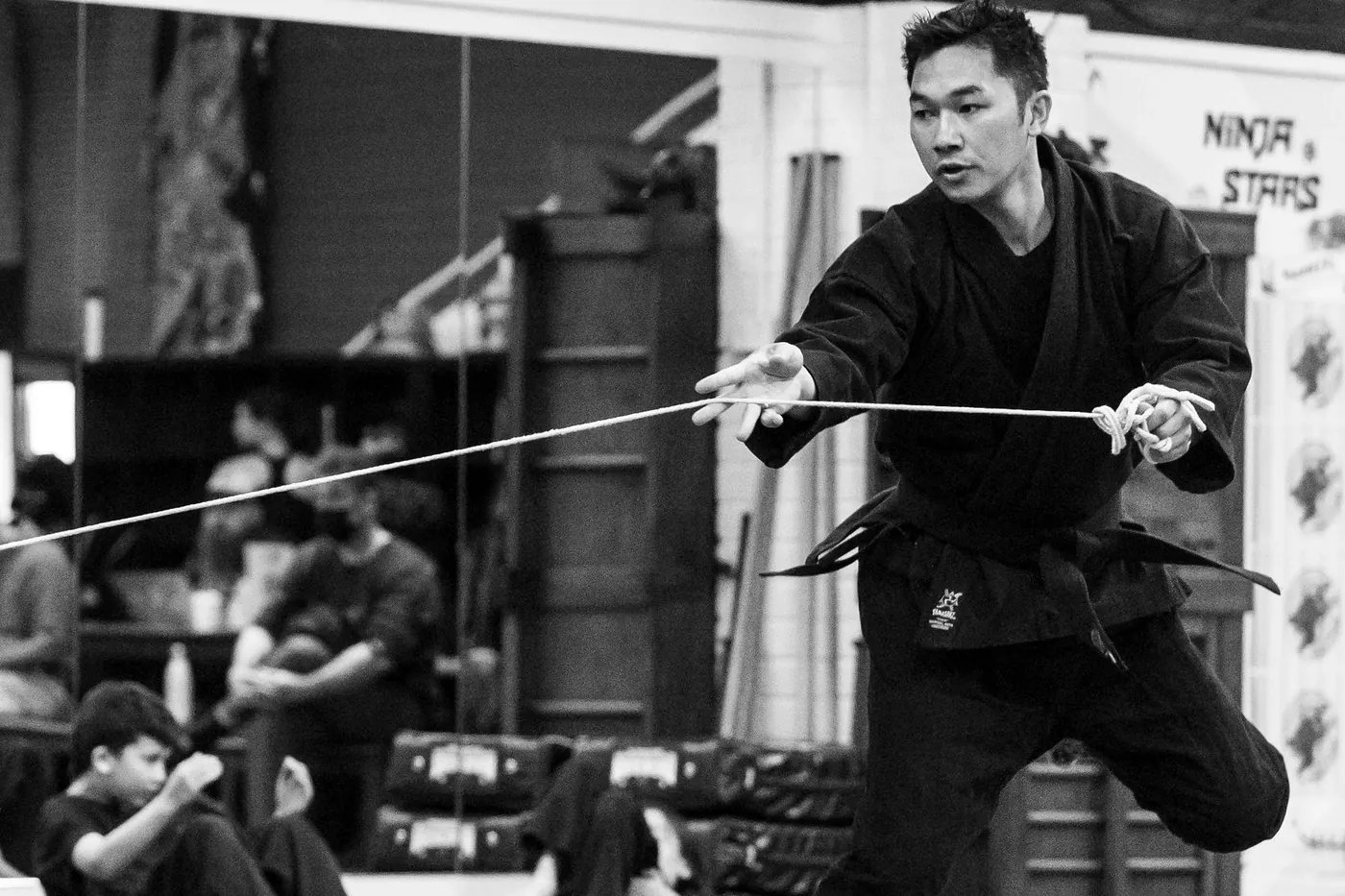
Flexible weapons move differently to a rigid staff or blade, so they teach a different kind of control. The kasarifundo (short rope) is used to strike, wrap, lock and choke. Hojojutsu (rope tying) is the art of restraining an opponent with a cord, and in the Bujinkan we practise it against a moving opponent who grabs, kicks or punches. Clothing such as a jacket or belt can be used in the same way, which makes this section very practical for everyday self defence. See flexible weapons training for more.
Sharp weapons: knife and swords
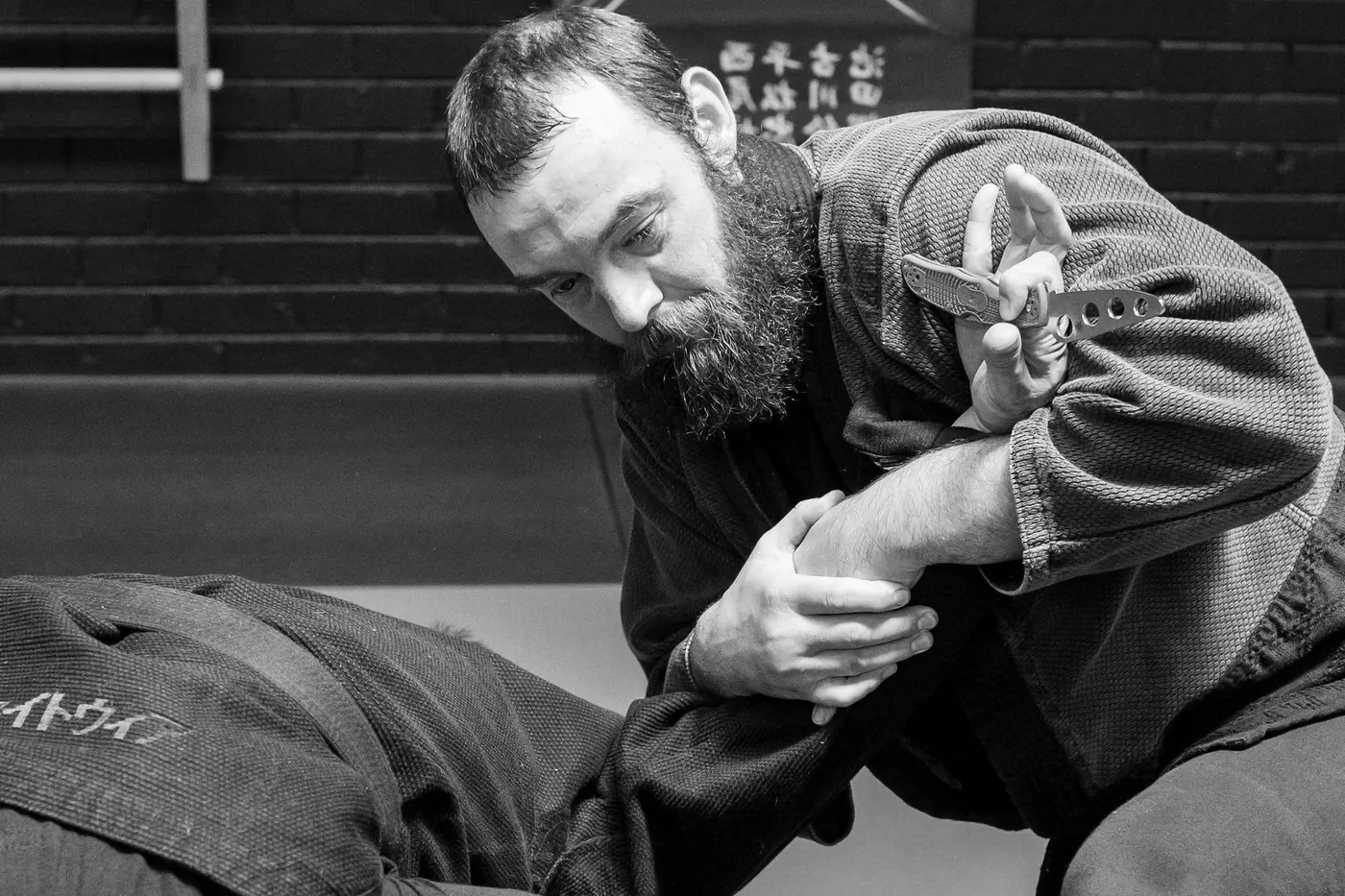
The tanto (knife), shoto (short sword) and katana (long sword) are always trained with wooden replicas. Sword training covers drawing, cutting, locks and strikes, as well as mutodori, the unarmed techniques against a sword. Training against a blade also sharpens your awareness and footwork, because a mistake against a sword or knife is far more serious than a mistake against a punch. See sword training for more.
Is weapons training safe?
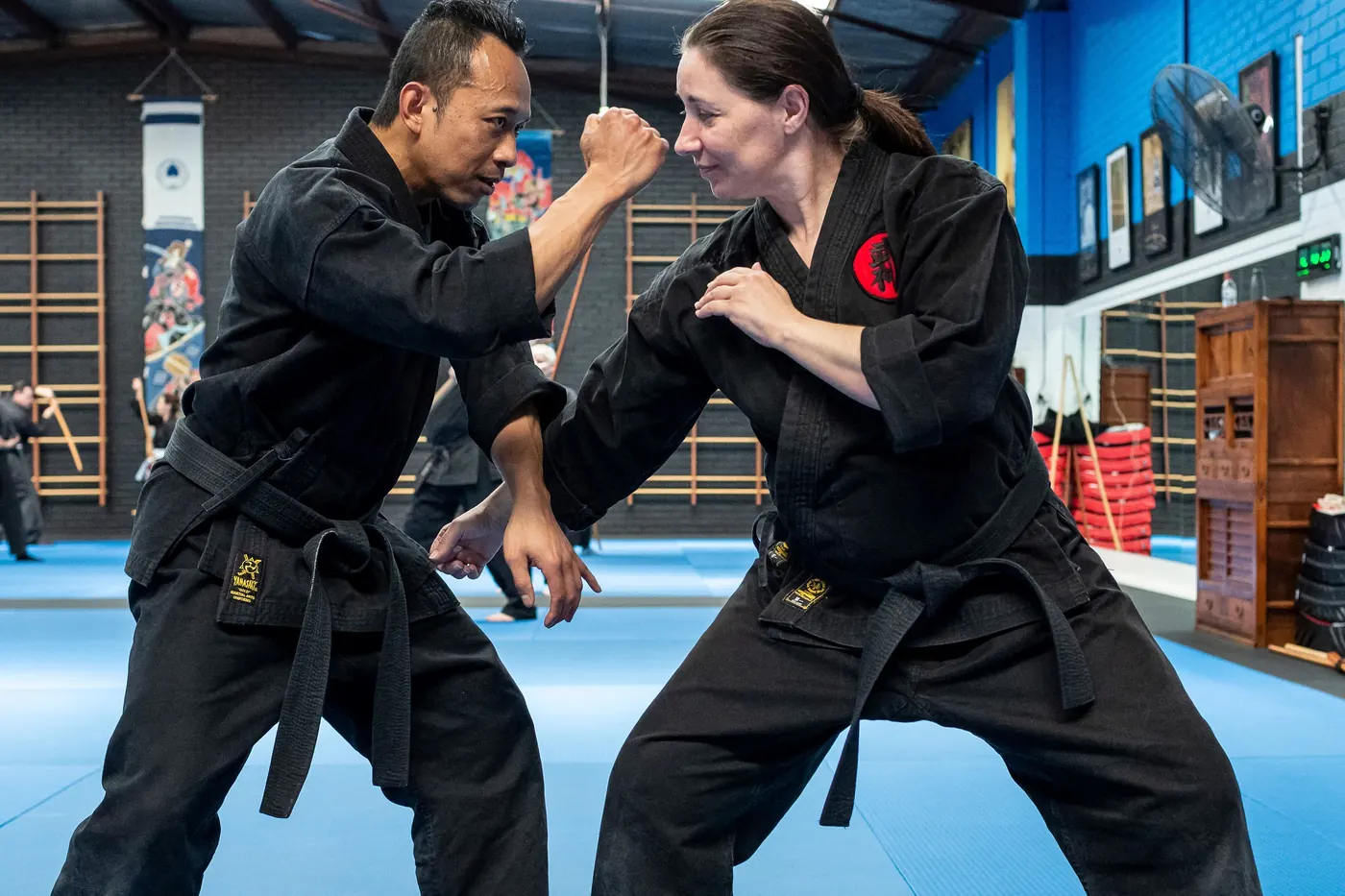
Yes. At the dojo we mostly train with wooden replicas, and new weapons are introduced slowly, starting with basic grips, stances and strikes before moving on to partner work. Most kata are trained in pairs against a nominated attack with a nominated defence, so both partners know what is coming. The training is very safe; the risk of injury is much lower than football or many other activities.
Bo-shuriken throwing
As well as the blunt, flexible and sharp weapons, we train in bo-shuriken, the traditional throwing spike of the ninja and samurai. Chief instructor Craig Guest holds a licence in bo-shuriken and is one of only two people in Australia to do so.
A bo-shuriken comes in many shapes and sizes, but a typical one is a steel spike about 15 centimetres long, similar in size to a pencil. It is usually thrown from distances of up to about 6 metres, and some heavier shuriken can be thrown from up to 20 metres away.
Shuriken are often pictured as the star shaped "ninja stars" seen in films, but the bo-shuriken is a straight spike. Throwing it well is a real skill: the grip, the release and the distance all have to work together so the spike turns the right amount in the air and strikes point first. Small changes in your posture, breathing and release show up straight away on the target, which makes shuriken practice an excellent way to develop focus, coordination and relaxed, efficient movement.
Our dojo is fortunate enough to have its own indoor shuriken range with five targets for practice, so shuriken throwing is trained regularly rather than just shown.
Regardless of which weapon we are practising, weapons training is always a lot of fun.